Insulin Resistance: The Quiet Reason the Scale Won’t Budge
By Tonia Amaloo, FNP-C | Medical Weight Loss | Beyond Health and Wellness, Oak Forest, IL
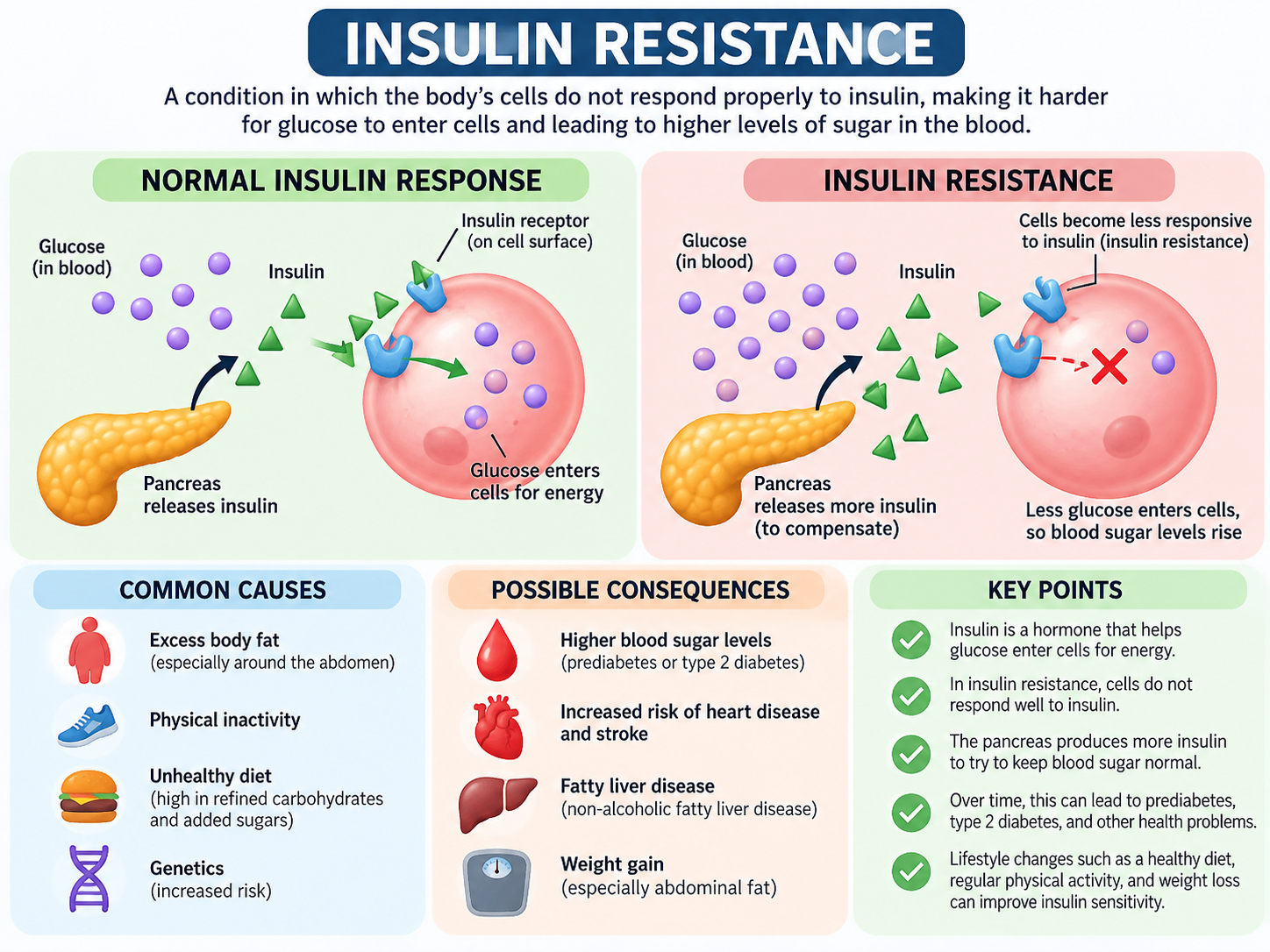
If you have ever eaten "all the right things," exercised faithfully, and still felt stuck, I want you to know something: it is probably not a willpower problem. In my practice, one of the most common hidden pieces of the puzzle is insulin resistance. It is also one of the least talked about, mostly because it rarely announces itself.
What Is Insulin Resistance, Anyway?
Insulin is a hormone made by your pancreas. After you eat, it helps move sugar (glucose) out of your blood and into your cells for energy. Think of insulin as a key and your cells as locked doors. With insulin resistance, the locks get a little sticky. Your body responds by making more keys, meaning more insulin, to get the same job done.
For a while, this works. Your blood sugar can look perfectly normal while your insulin quietly runs high in the background. Over time, the pancreas may struggle to keep up, and blood sugar starts to creep upward.
Why It Can Make Weight Loss Feel Impossible
Insulin does more than manage sugar. It is also a storage hormone, and higher levels make it harder for the body to release stored fat. Many women also notice stronger cravings, energy crashes in the afternoon, and hunger that shows up soon after a meal. That is not a character flaw. It is biology doing what biology does.
Signs Worth Paying Attention To
Insulin resistance can be silent, but some clues may include:
Extra weight carried around the midsection
Strong cravings for sweets or refined carbs
Feeling tired or foggy after meals
Darkened, velvety patches of skin on the neck or underarms (called acanthosis nigricans)
Irregular cycles or other hormone-related changes
None of these prove anything on their own. They are simply reasons to ask good questions and look at the numbers.
What the Labs Can (and Can't) Tell Us
Here is where it gets interesting. The standard numbers most providers check are fasting glucose and hemoglobin A1C. Using the American Diabetes Association categories, a fasting glucose of 100 to 125 mg/dL or an A1C of 5.7% to 6.4% falls in the prediabetes range, and a fasting glucose of 126 mg/dL or higher, or an A1C of 6.5% or higher, falls in the diabetes range.
The catch is that insulin resistance can exist for years before either number leaves the normal range. That is why some providers also look at fasting insulin or calculate a score from fasting insulin and glucose together. These tests can add helpful context, though there is no single universally agreed-upon cutoff, so results are best interpreted by a professional who sees your whole picture rather than one number in isolation.
Small Habits That Can Help
The good news is that insulin sensitivity is responsive to everyday choices. No promises or miracle cures here, but these are well-supported places to start:
Build your plate around protein, fiber and healthy fats. Eating protein and vegetables before the starchy parts of a meal may soften the glucose rise that follows.
Take a short walk after meals. In a small study of 12 healthy young adults (Scientific Reports, 2025), a 10-minute walk started right after a glucose drink lowered peak blood sugar compared with resting. It was a small study, so I would not call it a guarantee, but a gentle walk after dinner is low-risk and pleasantly free.
Lift something. Muscle is a major place your body parks glucose. Strength training helps your muscles use sugar more efficiently.
Protect your sleep. Even a few short nights can make the body less responsive to insulin, and tired brains crave quick sugar. Sleep is not a luxury here.
Manage stress where you can. Stress hormones nudge blood sugar upward. Breathing, boundaries, sunshine and laughter all count.
What About Medications and Peptides?
Peptides and medications are not bad, and they can be genuinely helpful when used appropriately and monitored by a professional. The key is knowing what you are getting. FDA-approved prescription medications have been reviewed for safety and effectiveness for a specific use. Research-only products are not approved for human use and should not be treated like treatment options. Compounded products are made by a pharmacy and are not FDA-approved. If anyone offers you a "metabolic" injectable or supplement, ask which of those three categories it falls into, and who will be monitoring you. (For more, see my post Peptides and Weight Loss: What's Approved, What's Not.)
The Bottom Line
Insulin resistance is common, often fixable in its early stages with lifestyle changes, and easy to miss. If the scale has stopped cooperating despite your best efforts, it may be worth looking under the hood rather than simply trying harder. You deserve answers, not just another diet.
Want Help Sorting Out What Makes Sense for You?
We see patients from Oak Forest, Tinley Park, Orland Park, Midlothian and Northwest Indiana. Call (708) 907-0700 to schedule a visit with Tonia Amaloo, FNP-C, at Beyond Health and Wellness and Applied Holistic Health, or learn more on our Medical Weight Loss page.
Sources: American Diabetes Association, Standards of Care in Diabetes (diagnosis and classification); Hashimoto K, et al. Positive impact of a 10-min walk immediately after glucose intake on postprandial glucose levels. Scientific Reports, 2025.
Beyond Health and Wellness · 15000 S Cicero Ave, Suite 100, Oak Forest, IL 60452
This article is for education only and is not medical advice. Do not start, stop or change any medication or supplement without talking with your healthcare provider.